
South Dalmatian Islands
A Slower Pace Of Life And Beautiful Wine Country
Korčula, Lastovo, and Mljet represent the soulful, emerald heart of the southern Adriatic, each offering a distinct escape from the polished bustle of more commercialized tourist hubs like Hvar or Dubrovnik. Visiting these three islands allows you to experience a "vertical" slice of Croatian heritage, moving from the sophisticated medieval urbanism of Korčula to the wild, mythical forests of Mljet and finally the deep, star-filled isolation of Lastovo.
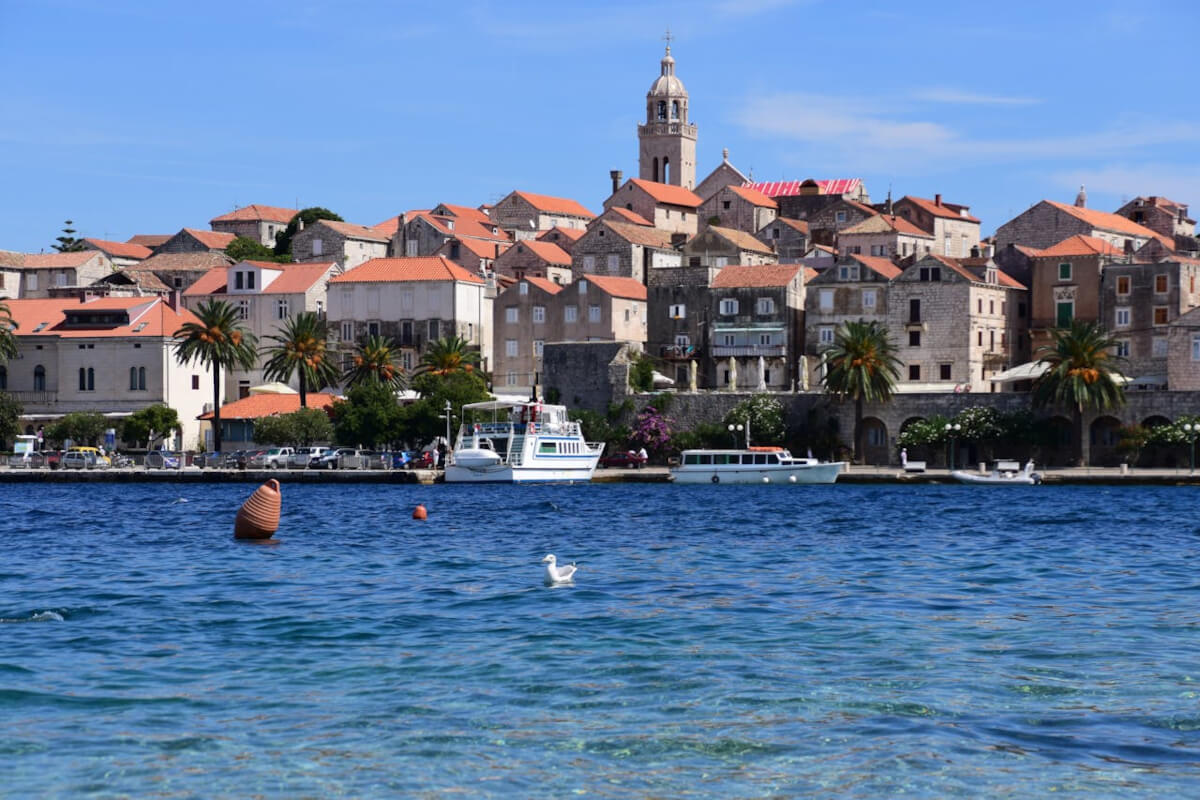
Korčula is often affectionately called "Little Dubrovnik" because of its stunning medieval walled town, yet it possesses a charm that is far more intimate and lived-in. The Old Town is famous for its "fishbone" street layout, a brilliant piece of early urban engineering designed to allow cool breezes to circulate while blocking the biting winter winds. Walking through its narrow alleys, you are surrounded by Venetian-style architecture and the alleged birthplace of Marco Polo, but the island’s true magic lies in its traditions. It is one of the few places where you can witness the Moreška, a dramatic 17th-century sword dance performed in the streets. Beyond the stone walls, the island transitions into a rolling landscape of vineyards that produce the rare Grk and Pošip white wines, which are indigenous to the island and almost impossible to find elsewhere. A visit here is a blend of high-end gastronomy, deep-rooted history, and the simple pleasure of cycling through pine-scented hills.
If Korčula is defined by its stone, Mljet is defined by its greenery. As the "most forested island in the Adriatic," nearly three-quarters of its land is covered in Aleppo pine and holm oak. The northwestern half is a National Park, centered around two interconnected saltwater lakes, Veliko and Malo Jezero. In the middle of the Great Lake sits the tiny Islet of St. Mary, home to a 12th-century Benedictine monastery that feels completely frozen in time. Legend says the island was so beautiful it kept Odysseus captive for seven years, and today, you can swim into the shimmering blue light of the Odysseus Cave on the southern coast. Visiting Mljet is an exercise in slow living; you spend your days kayaking on the still, warm waters of the lakes or hiking to viewpoints like Montokuc to see the green canopy meet the deep blue sea. It is a place of absolute quiet, where the air smells of salt and pine resin.
Lastovo is the choice for the true explorer seeking the "Adriatic as it once was." Because it was closed to foreigners for decades as a military base during the Yugoslav era, it remains one of the most untouched and authentic islands in Croatia. It is part of a protected Nature Park consisting of 46 islets, known for their rugged beauty and some of the richest fishing grounds in the Mediterranean. The island is famous for its unique "Fumari" chimneys—ornate, individualistic structures that crown the stone houses of Lastovo town—and its designation as one of the best stargazing spots in Europe. With almost no light pollution, the night sky here is a dazzling, dense carpet of stars. You should visit Lastovo to disappear; to stay in the Struga Lighthouse perched on a 90-meter cliff, to eat fresh lobster pulled from the sea that morning, and to experience a level of isolation and peace that is becoming increasingly rare in Europe.